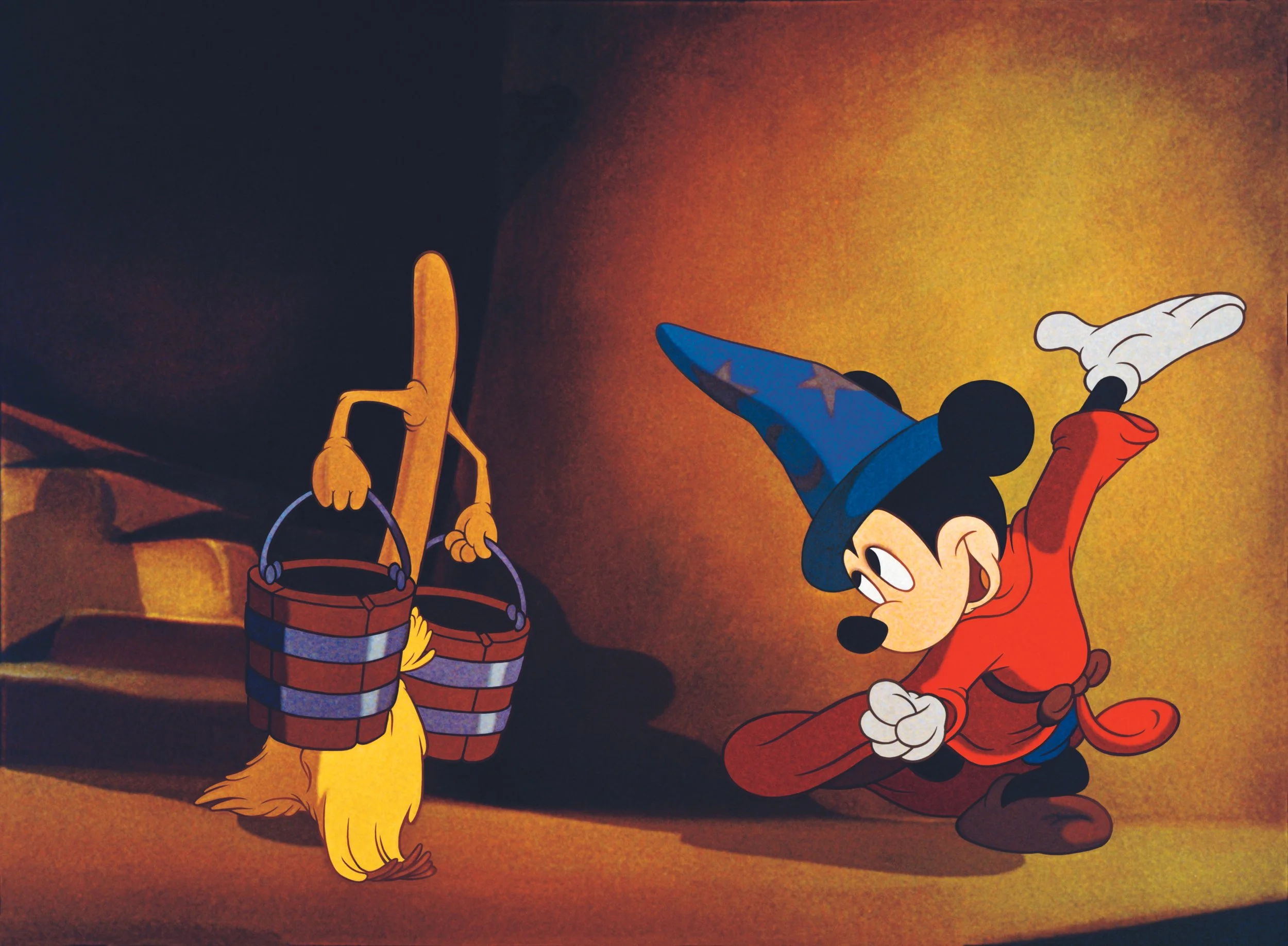
Dukas’ Sorcerer

From Fantasia, “The Sorcerer’s Apprentice”

While it would not be accurate to refer to French composer Paul Dukas (1865-1935) as a “one-hit wonder,” it is true that the fame of one of his works far eclipsed anything else he wrote. The Sorcerer’s Apprentice, already a popular concert piece, was brought to much wider attention by being included in Walt Disney’s 1940 animated film Fantasia.

The Sorcerer’s Apprentice is an example of a tone poem or symphonic poem. It was inspired by Goethe’s ballad “Der Zauberlehrling.”

In it, an old sorcerer leaves his apprentice to fetch water. Tiring of his work, the apprentice enchants a broom to do the work for him. Although the broom performs efficiently, the apprentice finds he does not know how to stop it. The room becomes awash with water.

Just when all seems lost, the old sorcerer returns and quickly breaks the spell, noting that powerful spirits should only be called by the sorcerer himself.

Dukas demonstrated in this work that he was a master of vivid orchestration and dramatic pacing.

Subscribe to receive an email notice when I post a new blog article.

Please leave a comment on the original post.

Performed here by Orchestre National de France; Georges Prêtre, conducting; Seraphim Classics CDR 7243 5 73427 2 8
Edward Wolfe

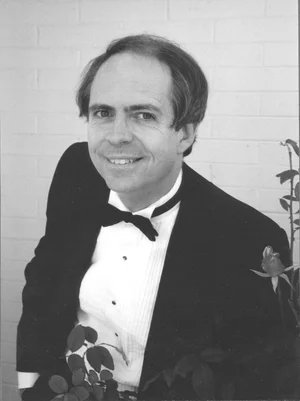
Edward Wolfe has been a fan of Christian apologetics since his teenage years, when he began seriously to question the truth of the Bible and the reality of Jesus. About twenty years ago, he started noticing that Christian evidences roughly fell into five categories, the five featured on this website.
Although much of his professional life has been in Christian circles (12 years on the faculties of Pacific Christian College, now a part of Hope International University, and Manhattan Christian College and also 12 years at First Christian Church of Tempe), much of his professional life has been in public institutions (4 years at the University of Colorado and 19 years at Tempe Preparatory Academy).
His formal academic preparation has been in the field of music. His bachelor degree was in Church Music with a minor in Bible where he studied with Roger Koerner, Sue Magnusson, Russel Squire, and John Rowe; his master’s was in Choral Conducting where he studied with Howard Swan, Gordon Paine, and Roger Ardrey; and his doctorate was in Piano Performance, Pedagogy, and Literature, where he also studied group dynamics, humanistic psychology, and Gestalt theory with Guy Duckworth.
He and his wife Louise have four grown children and six grandchildren.

https://WolfeMusicEd.com
Next
Next

Thanksgetting